The evolution of mobile devices has taken us down paths where innovation sometimes sacrifices usability. My personal journey through the Android ecosystem is a testament to this: from the curve of the Galaxy Edge and the balance of the S23 FE, to the absolute solidness of the S25 Ultra, which I consider the pinnacle of the traditional format. In between, my first foray into flexible screens with the Pixel 10 Pro Fold gave me a clear perspective on what this technology promised.
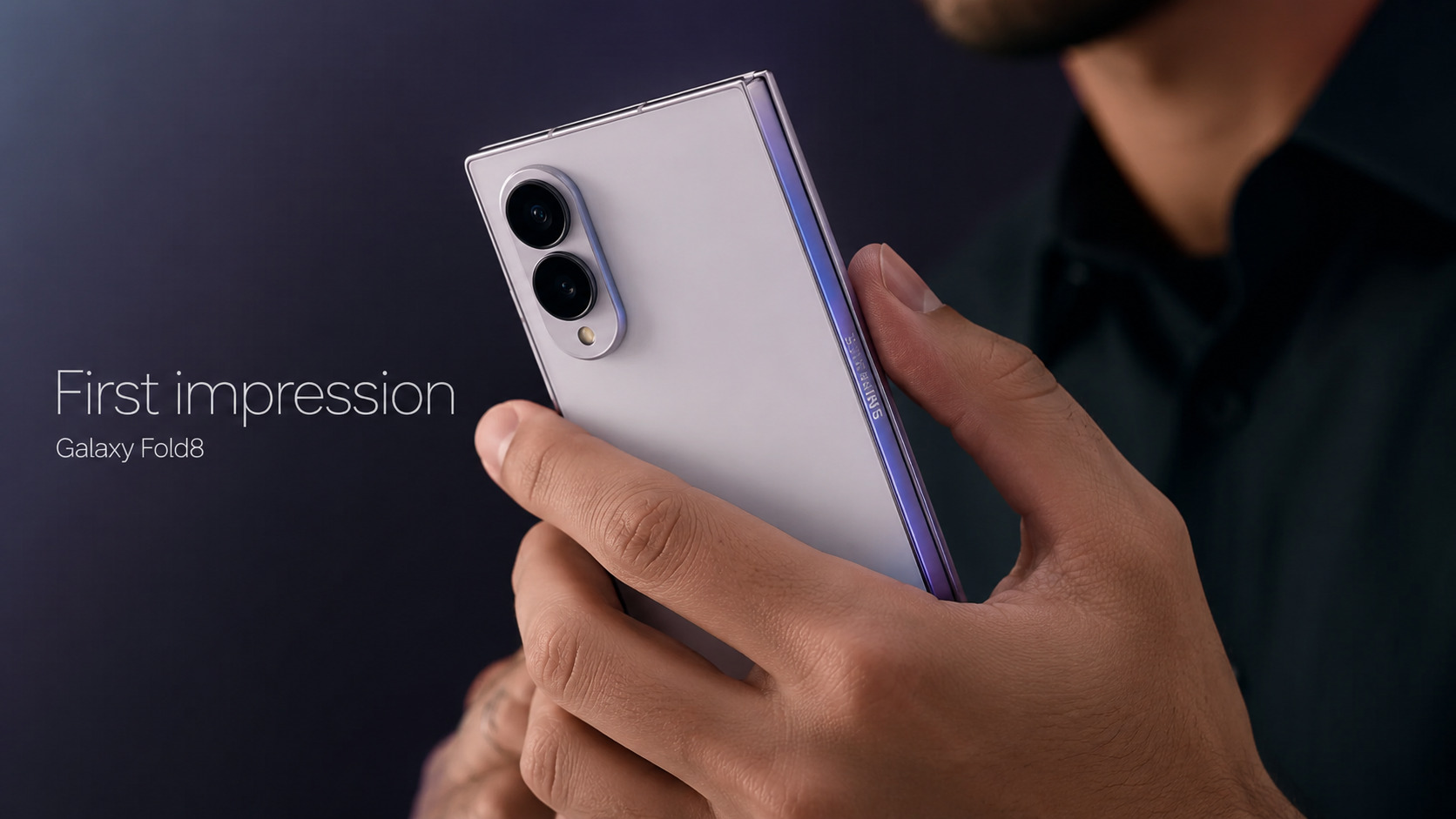
Today, thanks to an Anytime Upgrade plan, the Galaxy Fold 8 has reached my hands, and the conclusion is evident: the foldable format has finally reached its physical maturity, although global software is not yet ready for it.
The Triumph of Industrial Design
The first thing that strikes you about the Fold 8 is its weight. Gone are the days when carrying a foldable in your pocket was like carrying a brick; this is a truly compact and astonishingly light device. Samsung has refined the hinge and chassis engineering to the point of creating the most comfortable Fold in the lineup.
But the real turning point is the outer screen. By being wider and adopting logical proportions, it breaks the paradigm of previous models. The need to constantly unfold the device has disappeared. Today, the Fold 8 operates like a traditional high-end phone in 80% of situations, reserving the extended inner panel strictly for when heavy multitasking or immersive media consumption demands it.
Ergonomic Friction
Not everything is perfect in the device's architecture. In what seems to be a redistribution of internal components to achieve this record thickness and weight, the button layout has suffered a questionable redesign. The positions of the volume control and the power button feel inverted. It is a stumble in muscle memory and daily ergonomics that forces you to relearn how to physically interact with the device; they should occupy clearly differentiated positions to avoid accidental touches.
Hardware of the Future, Software of the Past
All the backing and power of Samsung's technology are present, making the transition between screens seamless at the operating system level. However, this is where we clash with the reality of the market: third-party applications do not adapt.
Hardware is advancing by leaps and bounds, but interface design has remained stuck in standard resolutions. The atypical geometry of the Fold 8 breaks traditional breakpoints. By managing and designing my own platforms and applications, I have had to dive directly into modifying the source code, adjusting the CSS and styles by hand to ensure that the interfaces do not break when faced with this revolutionary presentation.
Foldable screens demand rethinking responsive design from scratch. It is no longer enough to adapt elements from mobile to desktop; now we must design for dynamic transition states.
Verdict
The Galaxy Fold 8 is a technological charm. It is the fulfilled promise of carrying a massive screen in a lightweight and truly portable format. However, its brilliance exposes the outstanding debt of software developers, who now have the challenge of building interfaces that live up to the hardware we already carry in our pockets.